
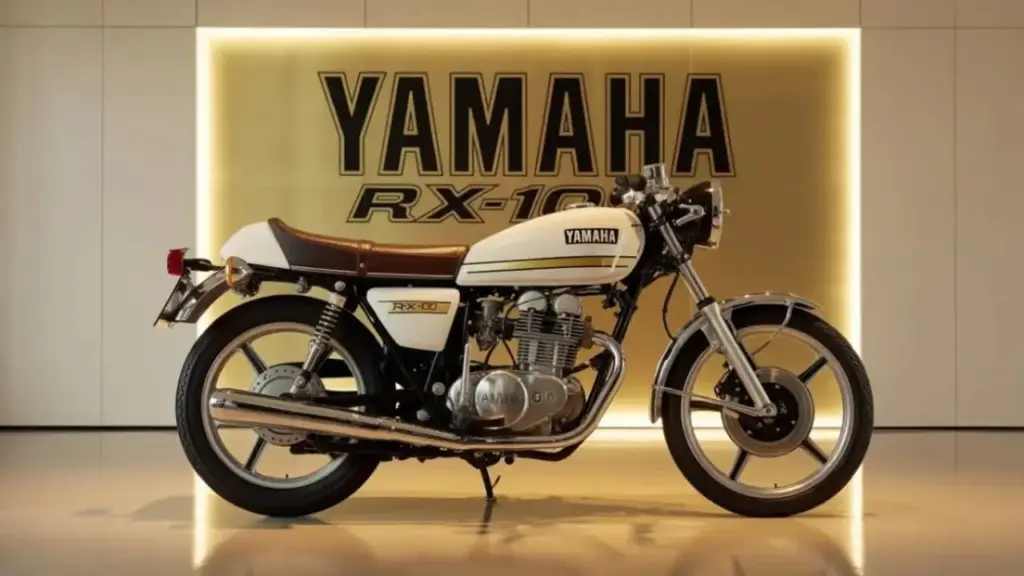
The Yamaha RX 100 is not just remembered as a motorcycle—it is remembered as a movement. When it first entered the Indian market decades ago, it offered something rare: light weight, quick response, and everyday usability at a time when choices were limited.
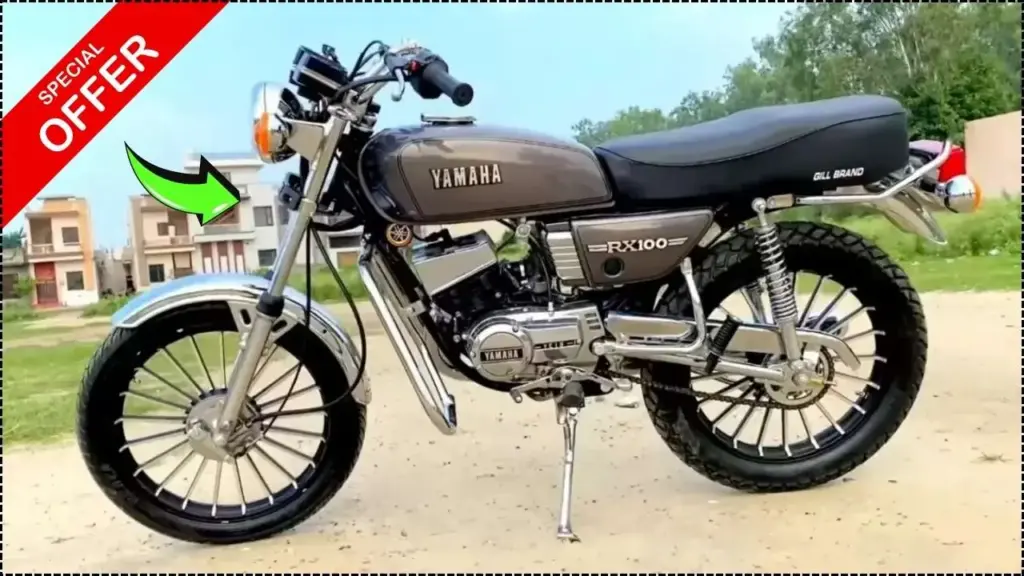
Over the years, the RX 100 became a symbol of reliability and freedom, especially for middle-class households and young riders. Even today, the original RX 100 enjoys a cult following.
Yamaha RX 100 New Model Overview
| Key Aspect | Details |
|---|---|
| Model Name | Yamaha RX 100 New Model |
| Engine Type | Petrol, commuter-oriented |
| Mileage | Up to 90 kmpl |
| Top Speed | 110 km/h |
| Transmission | Manual |
| Fuel System | Petrol |
| Expected Price | ₹14,999 (reported) |
| Primary Use | Daily commuting |
| Target Buyers | Budget-conscious riders |
Now, reports indicate that Yamaha is preparing to bring back the RX 100 name in a completely new form. The revived version is expected to focus on affordability, efficiency, and practicality rather than nostalgia alone. With claims of 90 kmpl mileage, a top speed of 110 km/h, and a reported starting price of ₹14,999, the upcoming model has already sparked serious interest among budget bike buyers across India.
Yamaha RX 100 New Model
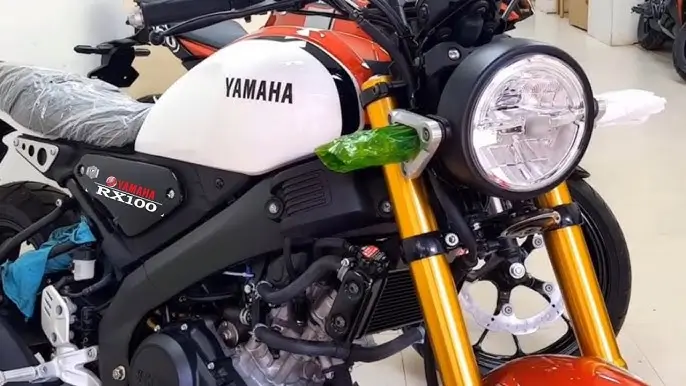
The Yamaha RX 100 New Model is being positioned as a no-nonsense commuter motorcycle. Instead of competing with premium or sporty bikes, Yamaha appears to be targeting riders who need dependable daily transportation at the lowest possible cost.
This includes students, office commuters, small traders, and rural users who prioritize fuel savings and ease of ownership. Unlike the original RX 100, which was known for its two-stroke performance, the new model is expected to use a modern four-stroke engine to meet current emission standards.
While the character of the bike may be different, the core philosophy remains the same: simple engineering, efficient performance, and mass-market appeal.
Engine and Everyday Performance
The new RX 100 is expected to focus on smooth and predictable performance rather than aggressive acceleration. A commuter-friendly engine setup means the bike should be easy to ride in city traffic, with enough power to handle daily routes comfortably.
A top speed of 110 km/h is more than sufficient for Indian road conditions. Most commuters rarely ride beyond 70–80 km/h. The emphasis here is on reliability and consistency, not racing performance. Yamaha’s experience in building long-lasting engines could play a key role in ensuring durability.
High Mileage Advantage of Yamaha RX 100 in Real Life
Mileage is one of the strongest selling points of the Yamaha RX 100 New Model. A claimed 90 kmpl efficiency could significantly reduce monthly fuel expenses. For riders covering 40–50 km daily, the savings over a year can be meaningful.
Fuel efficiency also provides psychological comfort. Riders worry less about fuel price fluctuations and refueling frequency. This is particularly important in rural areas where fuel stations may be far apart.
Simple Design That Reduces Costs
The design philosophy of the RX 100 New Model is expected to stay minimal. Simple body panels, basic lighting, and a traditional riding posture help keep production and repair costs low.
Minimal design also improves long-term durability. Fewer cosmetic parts mean fewer chances of damage and lower replacement costs. For buyers planning to use the bike for many years, this simplicity works in their favor.
Yamaha RX 100 Features Focused on Utility
Yamaha is unlikely to overload the RX 100 New Model with features. Basic instrumentation, standard lighting, and essential controls are expected. This approach aligns with the bike’s purpose as a utility commuter. While modern buyers often expect digital displays and connectivity, such features also increase costs and complexity. For this segment, functionality outweighs technology.
Safety and Braking Expectations
At this price point, the RX 100 New Model is expected to use a basic braking setup suitable for city speeds. Riders should expect predictable braking rather than high-performance stopping power. Low weight will also contribute to easier control and maneuverability. For daily commuting at moderate speeds, this balance is generally sufficient.
Ownership Cost Over Five Years
Beyond the purchase price, ownership cost plays a major role in affordability. With high mileage, fuel expenses remain low. Simple mechanics mean routine servicing should not be expensive. Over a five-year period, total ownership cost is expected to remain among the lowest in the motorcycle market. This makes the RX 100 New Model attractive for buyers who think long-term.
Service Network and Accessibility
Yamaha has a well-established service network across India. If the RX 100 New Model is produced in large numbers, spare parts availability is likely to be widespread. Easy access to service centers reduces downtime and repair anxiety, especially for riders in smaller towns.
Urban Traffic and Daily Usability
In crowded cities, lightweight motorcycles offer a clear advantage. The RX 100 New Model is expected to be easy to maneuver through traffic and simple to park in tight spaces. Its upright seating position and manageable dimensions should make daily commuting less tiring, especially for beginners.
Low weight, simple controls, and predictable handling can make the RX 100 New Model suitable for women riders and older users. Easy maintenance and low seat height, if offered, would further enhance accessibility.
For rural users, reliability matters more than features. High mileage, simple design, and affordable servicing make this bike well-suited for village roads and long-distance daily use. It can serve multiple roles—from personal commuting to small business transport.
Resale Value Expectations
The RX nameplate carries strong emotional value. If Yamaha delivers a reliable product, resale value could remain stable despite the low initial price. A bike that is cheap to buy, cheap to run, and easy to sell later offers strong overall value.
Modern emission norms require cleaner engines. The RX 100 New Model is expected to comply with current regulations, ensuring it remains legally viable across India. This also improves fuel efficiency and reduces environmental impact compared to older models.
Yamaha RX 100: Then vs Now
The original RX 100 was about speed and thrill. The new RX 100 is about efficiency and affordability. While the personality may differ, both versions reflect the needs of their respective times. The revival is less about nostalgia and more about practical mobility.
Who Should Buy the Yamaha RX 100 New Model
- Daily commuters with long travel distances
- Students and first-time riders
- Budget-focused families
- Rural and small-town users
Who May Not Find It Ideal
- Riders seeking high performance
- Buyers wanting premium features
- Long-distance touring enthusiasts
Related Links
Yamaha MT-07 2025 Bumper Sale Launch! CP2 Engine Power, Smart Features & Dhamaka Offers
Final Buyer Checklist
Before purchasing, buyers should:
- Confirm official price and specifications
- Check service availability locally
- Understand warranty terms
- Compare total ownership cost
The Yamaha RX 100 New Model has the potential to become one of the most practical motorcycles in the budget segment. With its focus on fuel efficiency, affordability, and simplicity, it addresses the core needs of Indian riders.
If Yamaha delivers on its promises, the RX 100 could once again become a common sight on Indian roads—not as a performance icon, but as a symbol of smart, economical mobility for everyday life.